
Are Pennsylvania’s Mandatory Minimum Sentencing Laws Unconstitutional?
After receiving criminal charges, most people immediately worry about the worst case scenario. How much could I potentially be fined? What’s the longest period of time I could be sent to prison for? But while the maximum sentence may be the more alarming of the two numbers, the minimum sentence is the part that can be mandatory. In Pennsylvania, certain convictions come with certain sentences which judges cannot reduce. Or at least, that’s the way the system has worked in the past. But now, in the bumpy wake turbulence left behind by U.S. v. Alleyne, some attorneys and politicians are trying to prove that Pennsylvania mandatory minimum sentencing is unconstitutional.
Mandatory Sentencing in Pennsylvania
Mandatory minimum sentences are typically associated with drug charges and weapons crimes, but they can be triggered by numerous violent and nonviolent charges alike. Here are just a few examples of the many mandatory minimums currently in effect in Pennsylvania:
- Aggravated Assault: 2 years
- Marijuana Possession (at least 2 pounds, fewer than 10 pounds): 1 year
- Theft by Deception: 1 year
- Trafficking Drugs to Minors: 1 year
- Vehicular Homicide with DUI: 3 years
Some of the minimum sentences are more wide-ranging, verging on vague:
- Certain Bullets Prohibited: 5 years
- Certain Drug Offenses Committed with Firearms: 5 years
- Sentences for Offenses Committed with Firearms: 5 years
But are these sentences in line with the Constitution?
What is “Standard of Proof” in a Criminal Case?
In U.S. v. Alleyne, the Supreme Court determined that if a factor in a case could lead to an increased mandatory minimum (e.g. five years for carrying a firearm during a violent crime, but seven years for “brandishing” the firearm), that factor must be reviewed by the jury and not just the judge. Pursuant to Alleyne, if this process does not occur, it comprises a violation of the Sixth Amendment, which upholds legal rights for defendants in criminal cases.
The problem is that in Pennsylvania, state law leaves this power in the hand of the judge — and the standard of proof for judges is different from the standard of proof for juries. (This imbalance has been touched on in the past, such as in the case of Borchardt v. State of Maryland.)
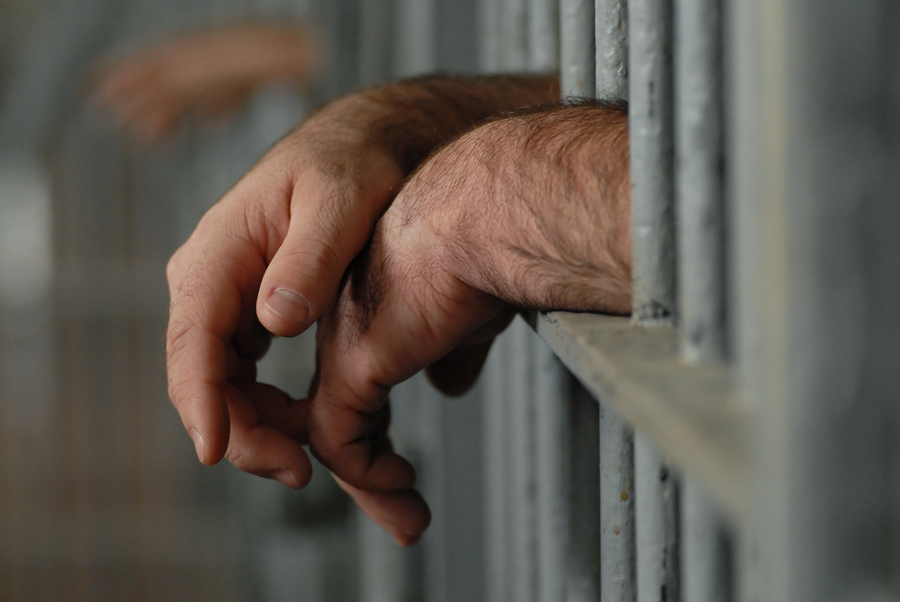
Examples of Mandatory Sentencing Appeals in Pennsylvania
In June, five Bucks County judges, including Judge Wallace H. Bateman, ruled in favor of Ingrid Rodriguez, an alleged heroin offender whose defense lawyer argued that the mandatory minimum sentencing applications violated Constitutional rights. The District Attorney’s Office, which controls mandatory minimum sentencing, plans to appeal.
Since the Rodriguez decision, a tidal wave of appeals by criminal defendants has crashed onto Pennsylvania’s court system. In the words of Peter Rosalsky, who works with the Defender Association of Philadelphia, the issue is taking over “nearly every single courtroom in every single county.”
And it isn’t only judges, attorneys, and defendants who are getting involved. State Senator Stewart Greenleaf (R-Montgomery), Chairman of the Senate Judiciary Committee, welcomes the chance to review and revise the standing laws.
“We can’t correct one injustice with another injustice,” Greenleaf argues. “That’s what the Alleyne case is trying to get at. If you’re going to sentence someone, you’ve got to prove it.”
Interestingly enough, Greenleaf’s opinion is rooted in his past as a prosecuting attorney — and speaking as an experienced prosectuor, Greenleaf states that he disagrees with mandatory minimums “for one reason: they’re not effective.”
In support of his stance, Greenleaf cites a 2009 study conducted by the Pennsylvania Commission on Sentencing which determined that “neither length of sentence nor the imposition of a mandatory minimum sentence alone was related to recidivism.”
What do you think? Are the current minimums appropriate, or excessive?
Pennsylvania Criminal Defense Attorneys Offering Free Consultations
If you have been charged with committing a crime in Bucks County or elsewhere in Pennsylvania, an experienced Bensalem criminal defense attorney can help protect your legal rights and advocate on your behalf. To schedule a free and confidential case evaluation, call the Levittown DUI defense lawyers at Young, Marr, Mallis & Associates at (609) 755-3115 in New Jersey or (215) 701-6519 in Pennsylvania, or contact us online today.