
Warrants for Traffic Tickets Explained

After you’re issued a traffic ticket, you have two options: you can accept it and pay the fine, or deny it and fight the ticket in court. But if you do neither, a judge can issue a bench warrant for your arrest. Our Philadelphia traffic violation lawyers explain how traffic offenses can lead to warrants, and what you should do if there’s a bench warrant out for your arrest.
How a Traffic Ticket Can Lead to a Bench Warrant
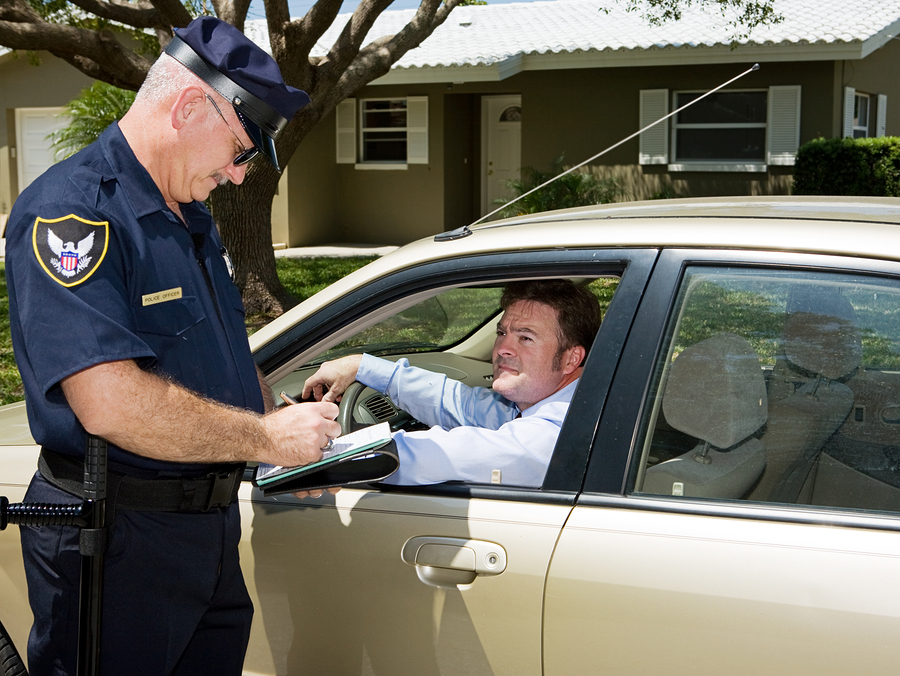
Tickets can be issued for two basic types of traffic violations: moving violations (such as speeding, failure to use turn signals, or failure to wear a seat belt), and non-moving violations (such as unauthorized parking in a handicapped zone, or having an invalid vehicle registration). Tickets are issued by law enforcement officers, and include details about the offense and the possible penalties.
Once you receive a ticket, there are two ways you can respond: you can either plead guilty and pay the fine, or plead not guilty and arrange for a court hearing to fight the alleged violation with the help of a Bucks County traffic attorney. However, if you do not pay the fine and do not appear in court, the judge can issue a warrant from “the bench,” also known as a bench warrant.
With a bench warrant against you, any future routine traffic stop could be the catalyst for your arrest. If an officer should stop you for any reason, he or she has an obligation to take you into custody. The arresting officer does not have the authority to release you until the warrant is lifted by the courts.
It’s also important to point out that you cannot avoid a warrant by “waiting it out” or physically running away. Outstanding warrants do not expire, nor are they confined by geographical boundaries.
If you are apprehended outside of the county or even state where the warrant was originally issued, you will be detained and the arresting officers will inform personnel in the appropriate county or state so that you may be extradited. Once you are taken into custody, it’s possible that you might be able to see a judge immediately — but you could also be held in jail for up to 72 hours before you are even entitled to a warrant hearing.
Pursuant to 234 Pa. Code Rule 150, the warrant is longer be valid once you are in custody, and will be lifted once the hearing is over. The purpose of this hearing is to determine whether you should be freed or detained until a later hearing. This decision is left to the judge’s discretion, and you may have to post bail if you wish to be released from custody.
What Should I Do if There’s a Bench Warrant Against Me?
The bottom line is that attempting to ignore your ticket into oblivion simply won’t work. Do not make the mistake of “blowing off” a violation because you assume it is not a serious matter. As bench warrants make abundantly clear, failure to appear in municipal court is a serious matter — and in fact, it isn’t unheard of for police officers to conduct periodic “scofflaw” sweeps to apprehend serial court-dodgers. During one sweep in 2011, the Philadelphia Police Department rounded up 32 suspects who owed the city thousands in fines.
“These aren’t people who have just missed yesterday,” said Lt. Sam Turner. “These are people who have just blatantly decided that they’re not going to follow through with the tickets that they received.”
If you’ve already missed court appearances and think there may be a warrant against you, the prospect of turning yourself in (or eventually being arrested by an officer) can be very intimidating — but it’s an issue you will have to address sooner or later. However, before you do anything which might aggravate your legal situation further, you should contact a Bensalem traffic lawyer who has experience handling both traffic violations and bench warrants. Each person’s situation is unique, and a Quakertown traffic violation attorney will be able to advise you about the best possible course of action to take.
To arrange for a completely free and confidential case evaluation call Young, Marr, Mallis & Associates right away at (609) 755-3115 in New Jersey or (215) 701-6519 in Pennsylvania. You can also contact our law offices online.